Home Game 3
Browns vs Ravens

Each week the new board will be posted here, instagram, and facebook. Winners will be venmod by EOD. Proof of choice of numbers is posted on Facebook & Instagram.

OVER $75,000 RAISED
FOR CHILDREN WITH SJIA.
What is Systemic Juvenile Idiopathic Arthritis?
According to the Arthritis Foundation:
“Juvenile idiopathic arthritis (JIA) is the most common type of arthritis in kids and teens. About 10% to 20% of children with JIA have a rare and serious subtype called systemic juvenile idiopathic arthritis (SJIA) causing body-wide inflammation. “Systemic” means it may affect not only the joints but other parts of the body, including the liver, lungs and heart.
SJIA, sometimes referred to as Still’s disease, can occur any time during childhood, but it most commonly starts at about two years of age. Boys and girls are equally affected. SJIA also differs from other subtypes in that it’s the only one considered an auto-inflammatory rather than autoimmune disease.
SJIA is a very serious, and in some cases, life threatening disease. SJIA is more severe and can be more challenging to diagnose and treat than other types of juvenile idiopathic arthritis. Diagnosis is not done by a singular test. It must be done by a process of elimination as well as looking at the patient as a whole rather than just one symptom. It is a lifelong disease for many patients and can continue into adulthood. Treatment works for some but not all children.”


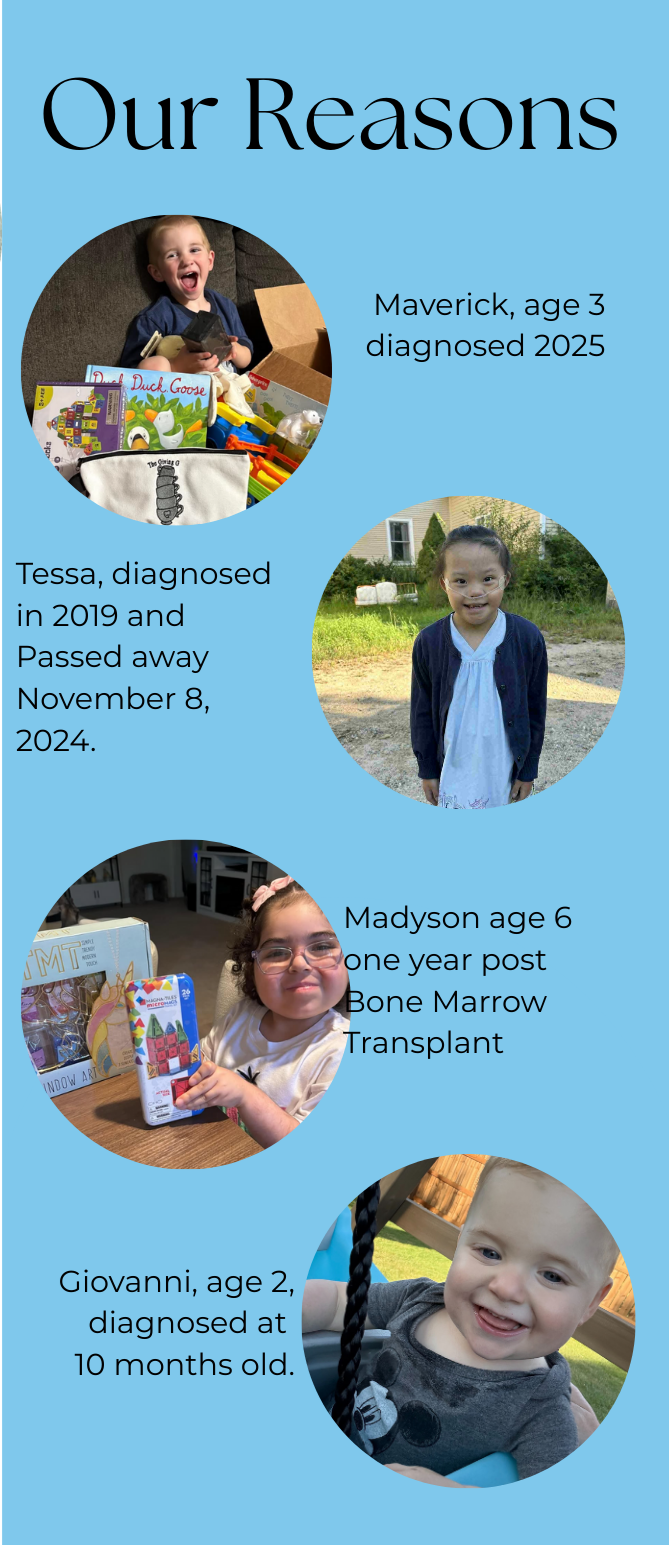
Symptoms of SJIA include:
Extremely painful, swollen or stiff joints
Reduced joint mobility
Eye inflammation
Fatigue
Decreased appetite/poor weight gain
Slow growth
High Fever
Swollen lymph-nodes
Skin rash
Treatment options for SJIA:
Non-steroidal anti-inflammatory drugs (NSAIDs)
Slow-acting anti-inflammatory drugs
Corticosteroids
Biological agents
Experimental or investigational agents

HOW DO WE FILL OUR CUP?
Raise funds for research towards better treatments and a cure for SJIA.
Support families of children with SJIA in need of necessary funds to receive treatment, transportation, and more during hospital stays and after discharge at hospitals in the United States of America.
Support families and children with SJIA during hospital stays as well as outpatient treatment centers across the USA by brightening a child’s day with books, toys, and a toiletry bag. We aim to provide moments of comfort and happiness during an already difficult time.
Where can you find us?





Make a Donation
Every act of generosity—big or small—helps a family whose child is suffering from SJIA.